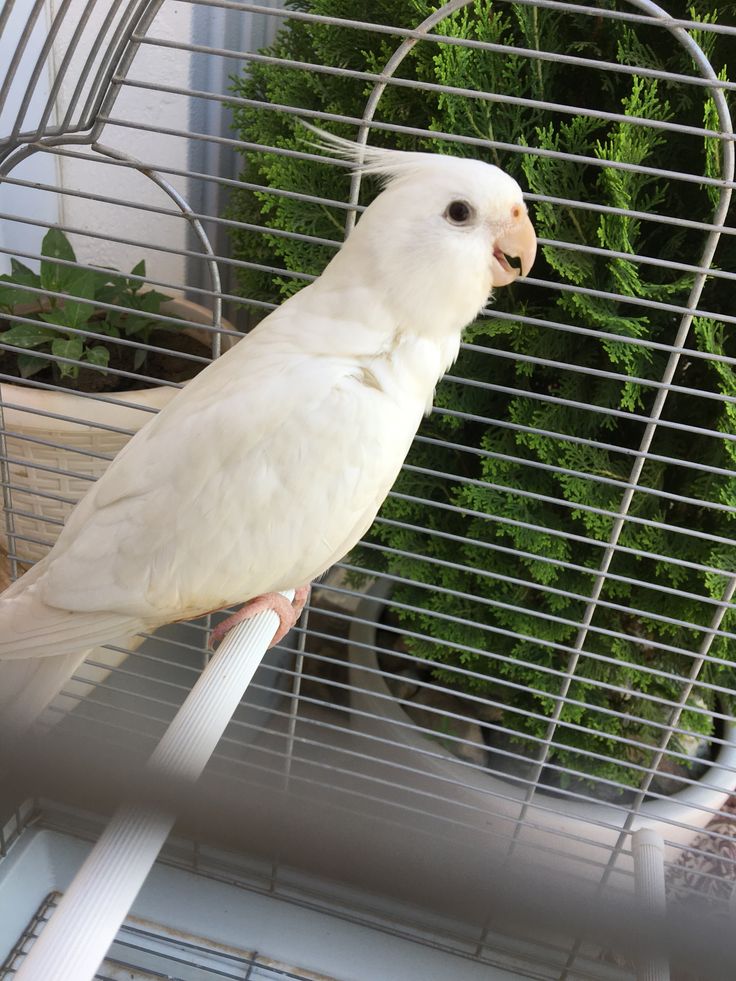
Albino Cockatiel – Breed Description
Scientific Name:
Nymphicus hollandicus (mutation: White-faced Lutino)
Origin:
- Native to Australia
- The Albino appearance was achieved through selective breeding in captivity by combining the Lutino and White-faced mutations.
Key Physical Characteristics
Trait Description
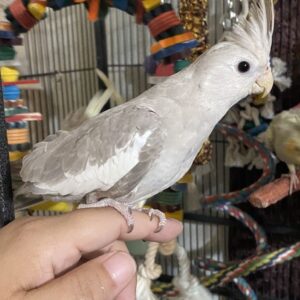
Body Color. Completely white (may have slight cream shading)
Face. White (no yellow or orange cheek patches)
Eyes. Bright red or ruby due to lack of pigment
Crest. White
Feet/Beak. Light pinkish or horn-colored
Sex Differences. Very subtle or unnoticeable visually
The „albino“ look comes from White-faced (removes yellow/orange) + Lutino (removes gray/black pigment).
Genetics Overview
- White-faced = Sex-linked recessive
- Lutino = Sex-linked recessive
Bird must inherit both mutations (from each parent) to appear “albino.”
Personality & Temperament
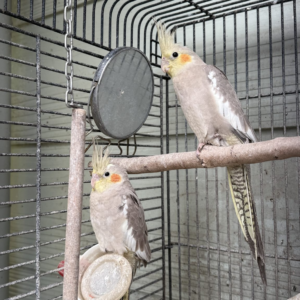
Like all cockatiels, Albinos are:
- Gentle and affectionate
- Intelligent and playful
- Can whistle, mimic sounds, and enjoy training
- Thrive on human interaction and daily attention
Size & Lifespan
- Length: 11–13 inches (28–33 cm)
- Weight: ~90–110 grams
- Lifespan: 15–25 years with proper care
Care Tips
- Diet: High-quality pellets, fresh veggies, limited seeds
- Cage: Spacious with horizontal bars (min. 24x18x24″)
- Enrichment: Toys, foraging, social time outside cage
- Socialization: Needs 1–2 hours daily of interaction
Feature. Albino Cockatiel
Appearance. All-white with red eyes
Genetic Mutation White-faced + Lutino
Sexing. Visually difficult; DNA testing preferred
Talking Ability. Can mimic simple sounds or whistles
Behavior Sweet, social, playful

Chinchilla male, adult
10-month-old Inca cockatoo for sale
Baby male flying squirrel
Genets available, male and female
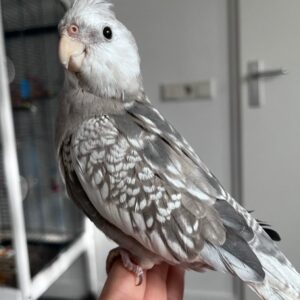
Male Silver Cockatiel Parrot for sale 


Rezensionen
Es gibt noch keine Rezensionen.