

Buy a blue-fronted amazon parrot
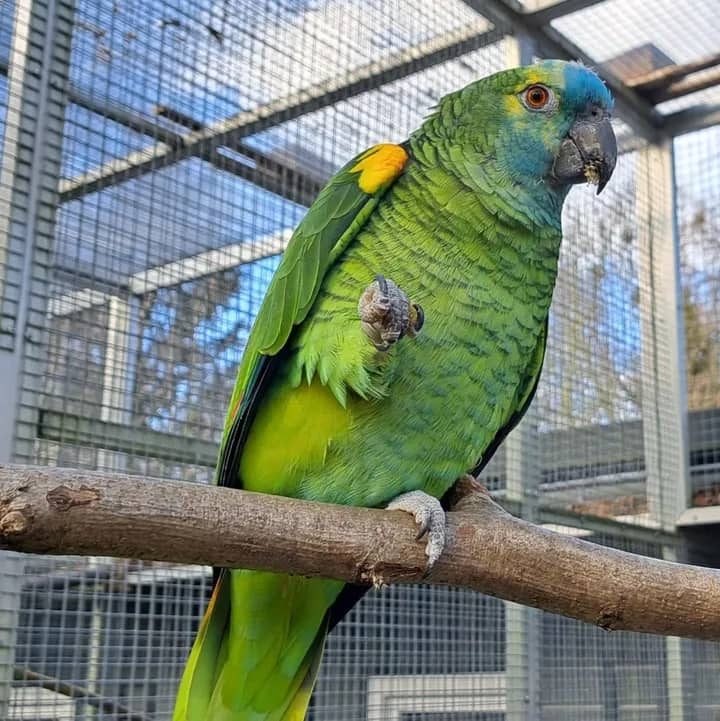
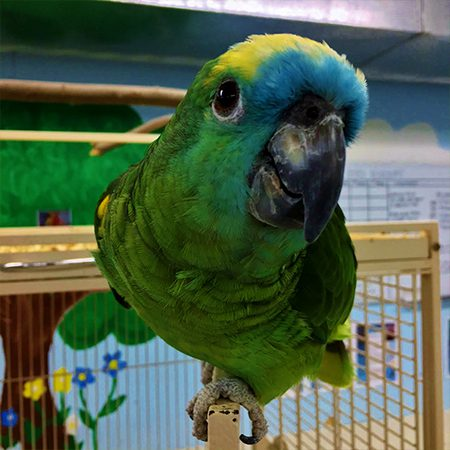
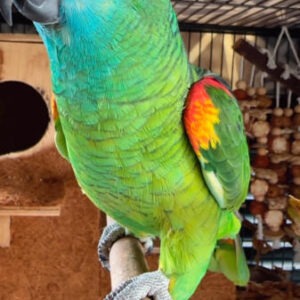
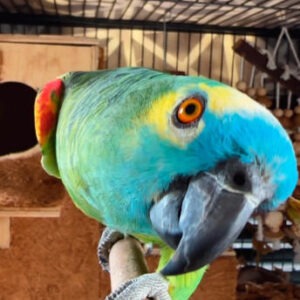
Buy a Blue-fronted Amazon parrot . Blue-fronted Amazons are a more talkative species of Amazon parrot. Hand-fed Blue-fronted Amazons are lively and sociable. Many consider this cruel, which isn’t entirely true. They are playful and curious, like all Amazons. They are Amazons and behave like Amazons, exhibiting the same well-known characteristics.
Caring for a blue-fronted amazon
These birds are highly intelligent and social and need regular human contact. Do not adopt an Amazon parrot if you do not have enough time for it.
The more activities you can do with your parrot indoors, the happier he will be. Whether it’s watching TV, tidying up, or eating dinner – the blue-fronted amazon wants to be involved. A portable play stand that you can move from room to room provides a good area for him to exercise. Your bird will delight you with his acrobatic displays.
The recommended minimum cage size for an active bird like a blue-fronted amazon is 90 cm, although larger is better. If you cannot obtain a sufficiently large cage, try to compensate by allowing the bird additional daily free-roaming time.
Common health problems
Some bacterial infections can cause respiratory problems in Amazon parrots, as well as a fatal fungal disease (aspergillosis) and nutrient deficiencies.
Among the most important bacteria that are problematic for Amazon parrots are E. coli, Citrobacter, Staphylococcus aureus, and Streptococcus aureus. These bacteria can spread through water, seeds, old food, damp areas, wet cages, or dusty places.
Blue-fronted Amazon parrots are prone to obesity and hypothyroidism. An active lifestyle with regular exercise can reduce the risk of these conditions.
Nutrition and nutrition
In the wild, blue-fronted amazons feed on fruits and berries, leaf buds and blossoms, as well as seeds and nuts. They are also believed to consume some protein. Like all parrots, blue-fronted amazons require a varied diet that mimics their natural food sources.
A healthy diet should consist of high-quality pellets, a high-quality seed mix, and daily portions of fresh, bird-friendly fruit and vegetables.
Specially formulated pellets are an ideal food and should ideally make up about 75 to 80 percent of a bird’s diet. Fruits, vegetables, and greens should comprise about 20 to 25 percent of the daily food intake. Seeds and nuts are high-fat foods that you can offer occasionally as treats. Start by giving your bird one cup of pellet parrot mix and half a cup of fruit and vegetables daily, then adjust the amount according to its appetite.
In general, these parrots can be fed in moderation many foods considered healthy, including chicken.
Schreibe die erste Rezension für „Blue-fronted Amazon parrot for sale – 14 months old“
Du musst angemeldet sein, um eine Rezension veröffentlichen zu können.
Rezensionen
Es gibt noch keine Rezensionen.